

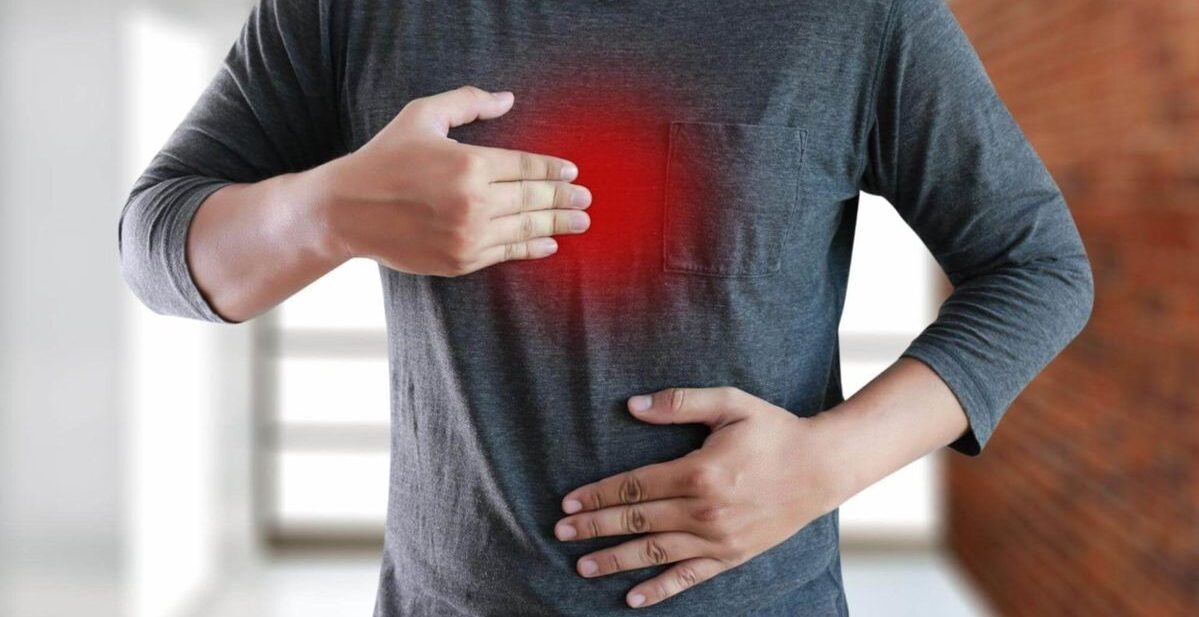
It’s 11:30 PM. You finished a heavy, spicy dinner an hour ago, and suddenly, a tight, burning sensation grips the center of your chest. Panic immediately sets in. Your mind races: Is it just the food acting up, or is it something far more sinister?
Every year, thousands of people rush to the emergency room convinced they are having a heart attack, only to be diagnosed with severe heartburn. Conversely, and far more tragically, many people stay at home popping antacids, mistaking a fatal myocardial infarction (heart attack) for mere indigestion.
When your chest is burning, the clock is ticking. Knowing how to tell the difference isn’t just about peace of mind—it’s about saving your life.
Why Do They Feel So Similar?
Before you blame yourself for not knowing the difference, understand that the confusion is entirely biological. According to experts at institutions like the Mayo Clinic and the American Heart Association, the stomach and the heart share the exact same nerve supply—the vagus nerve.
When a nerve in your chest is irritated, whether by stomach acid backing up into your esophagus (GERD) or by a blocked coronary artery starving your heart of oxygen, the pain signals sent to your brain travel along the same exact pathway. Your brain often can’t tell exactly where the SOS is coming from, resulting in “referred pain.”
The 5-Minute Checklist: Heartburn vs. Heart Attack
If you are experiencing chest discomfort, take a deep breath and run through this rapid 5-minute checklist to evaluate your symptoms.
- What Exactly Does the Pain Feel Like?
- Likely Acidity/Gas: It feels like a sharp, burning sensation just below your breastbone or ribs. It often leaves a sour or acidic taste in the back of your throat.
- Likely a Heart Attack: The pain is rarely described as “sharp.” Instead, patients commonly describe it as a heavy, crushing pressure—like an elephant is sitting on their chest. It feels tight, squeezing, and deep.
- Does the Pain Move? (Radiation)
- Likely Acidity/Gas: The burning may move slightly up your throat or stay localized in the center of your stomach/chest area.
- Likely a Heart Attack: Heart attack pain is notorious for radiating. If the heavy pressure in your chest begins spreading to your left arm, shoulder, neck, jaw, or upper back, this is a massive red flag. Seek emergency care immediately.
- What Triggered the Discomfort?
- Likely Acidity/Gas: Did you just eat a large, fatty, or spicy meal? Did you lie down immediately after eating? Heartburn usually flares up after eating or when bending over.
- Likely a Heart Attack: Did the pain start after physical exertion (like climbing stairs) or intense emotional stress? If the pain comes on during exercise and goes away with rest, it is a classic sign of angina (reduced blood flow to the heart), which requires immediate evaluation.
- What Makes It Better?
- Likely Acidity/Gas: Sitting up straight, drinking water, or taking an over-the-counter antacid usually provides noticeable relief within 15 to 30 minutes.
- Likely a Heart Attack: Heart attacks do not care about antacids. If you take an antacid and the crushing pressure remains constant or worsens, do not wait.
- What Are the Accompanying Symptoms?
This is often the ultimate tie-breaker.
- Likely Acidity/Gas: Burping, bloating, and minor nausea.
- Likely a Heart Attack: Look out for the “silent alarms.” If your chest pressure is accompanied by shortness of breath, breaking out in a sudden cold sweat, extreme dizziness, or a feeling of impending doom, these are critical signs of cardiac distress.
Special Warning: The “Atypical” Symptoms
Medical consensus from organizations like the Cleveland Clinic and Johns Hopkins Medicine highlights that women, the elderly, and patients with diabetes often experience “atypical” heart attacks. They might not feel the classic “elephant on the chest.” Instead, their heart attack might present purely as extreme fatigue, subtle jaw pain, or severe nausea that perfectly mimics a stomach bug or bad gas.
If you belong to a high-risk group (history of high blood pressure, high cholesterol, diabetes, or a family history of heart disease), never brush off unexplained upper body pain as just indigestion.
What to Do While You Wait
If you run through the checklist and even slightly suspect a heart attack, do not drive yourself to the hospital.
- Call emergency services immediately.
- If you are not allergic and a doctor has not told you otherwise, chew and swallow a standard aspirin (usually 325 mg) while waiting for the ambulance. Chewing it gets it into your bloodstream faster, where it can help inhibit blood clotting.
- Stay calm, sit down, and unlock your front door for the paramedics.
When in Doubt, Check It Out
The golden rule of cardiology is simple: It is always better to be embarrassed in the ER with a case of gas than to stay home with a dying heart muscle.
Don’t let the fear of a false alarm keep you from seeking help. Regular check-ups can help you understand your baseline risk for heart disease so you aren’t left guessing at midnight.
If you have been experiencing recurring chest discomfort, shortness of breath, or want to evaluate your cardiac health, don’t wait for an emergency. Expert care is right here in Pune.
[Link: Book a Comprehensive Cardiac Evaluation with Dr. Akshay Kashid Today]
To learn more about keeping your heart healthy and preventing cardiovascular disease, explore our [Link: Health Library & Cardiology Services].
Contact Us
For appointments, consultations, and emergency guidance.
Dr. Akshay Kashid Heart Care Clinic | Heart Specialist Doctor in Baner | Cardiologist in Baner, Pune,
Address: Office no. 301, S.No 9/16/1&2, V Business Center, Near Lakshmi-Mata Mandir, Balewadi-Baner, Pune-411045
Phone: 7058362823