
Introduction: Beyond the Beep of Your Smartwatch
In an age where your wrist can report the quality of (or lack of) sleep you got, it’s tempting to think a fitness tracker is your own personal health gauge. Even as smartwatches and bands become an everyday accessory, the question on everyone’s mind is: are they showing you the whole picture of your heart health- or merely skimming the surface?
At Pune Cardiology Clinic, we frequently get patients who are heavily dependent on wearable data, only to find there is an underlying cardiac disease that never got detected by those wearables. This blog explores the disconnect between fitness tracking and actual heart monitoring—and how you can fill that gap wisely.
-
What Fitness Trackers Really Do- and Don’t
Fitness bands have a wide-angle lens. They’re wonderful for tracking overall activity: step totals, heart rate, oxygen levels, sleep time, and occasionally a rough ECG trace. Those functions are akin to weather reports—they report what may be occurring, not what is actually occurring.
For example:
Heart rate readings may fluctuate with movement, sweat, or the color of your skin.
Sleep monitoring doesn’t capture the quality of sleep as accurately as a sleep study in a doctor’s office.
Calorie monitors operate on algorithms, not real metabolic measurements.
So, although your fitness tracker is a helpful coach, it is not a diagnostic tool.
-
Why ECG Still Matters- and Always Will
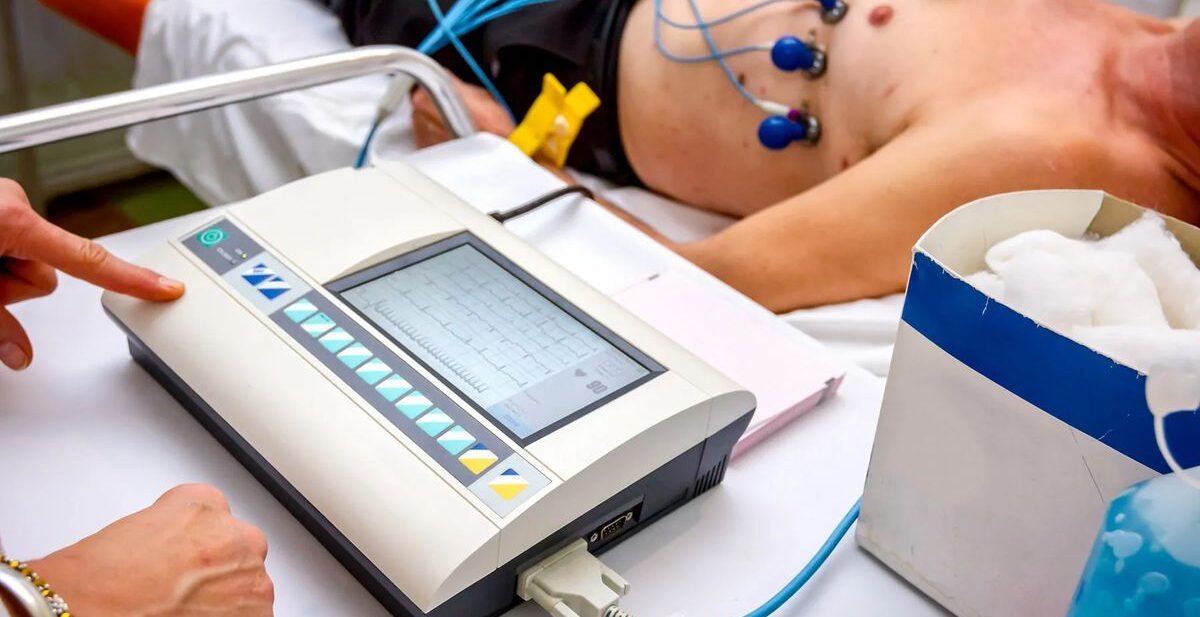
An electrocardiogram (ECG) is not a buzzword. It’s an old-fashioned but proven instrument that traces the electrical activity of your heart. Unlike your smartwatch, an ECG doesn’t estimate your rhythm- it records it.
An ECG can identify:
- Irregular heartbeat (arrhythmia)
- Indications of impaired blood flow to the heart
- Structural anomalies
- Silent heart attacks that have no visible symptoms
Wearable devices can warn you of a “potential abnormal rhythm,” but only an ECG can tell you what’s actually going on in those few critical milliseconds of every heartbeat.
-
Where Fitness Bands Fall Short—The False Confidence Effect
One of the most prevalent patterns observed at Pune Cardiology Clinic is the “false reassurance” effect. Individuals feel that if their smartwatch hasn’t sounded an alarm, their heart is okay. Sadly, silent ailments such as early-stage hypertension, blocked arteries, or stress-induced heart strain don’t provoke smartwatch alerts.
In reality, some of the most apparently healthy wearables belong to individuals who require immediate cardiac intervention, since the device never detected the internal warning signs.
-
Heart Health is More Than Numbers—It’s Patterns
Your heart health isn’t measured by the quality of one night’s sleep or one bout of one high pulse during exercise. It’s determined by patterns over time. This includes:
- Your resting heart rate trend over weeks
- How fast your heart rate goes back to normal after exercise
- Your blood pressure variation over the course of the day
- Emotional stimuli influencing your heart rhythm
No wearable technology, however sophisticated, can interpret context. Only a combination of clinical intelligence and diagnostics can accomplish that.
-
How to Monitor Heart Health the Right Way
Let’s couple technology with clinical sense. Here’s how to actually monitor your heart health in a meaningful way:
Baseline Testing: Begin with a professional ECG, blood pressure reading, lipid profile, and blood sugars. These establish your ‘normal’ baseline.
Use Your Tracker as a Prompt: Consider alerts or changes in data as a cue to research, not diagnose.
Monthly Manual Checks: Take a few minutes each month to take your own pulse, listen to your breathing while resting, and pay attention to any subtle tiredness.
Annual Heart Screening: Particularly after 30, yearly screening (even if asymptomatic) gets problems early—something wearables could miss.
-
Pune’s Urban Lifestyle and the Data Trap
While Pune’s urban tech and academic lifestyle appeals to many, they equate health with gadget data. However, heart stress does not necessarily occur in gyms or jogging. It can occur at a moment of quiet stress, an erratic meal pattern, or years of unmanaged mild hypertension.
The Pune Cardiology Clinic regularly treats patients who are busy on paper (10,000 steps a day!) but have been ignoring slow signals such as:
- Slight breathlessness after climbing stairs
- Morning exhaustion after 7 hours of sleep
- Discomfort in the chest when stressed
- These symptoms do not flash on your wrist- but they count.
Conclusion: Let Tech Help, Not Replace
Fitness bands make wonderful accountability friends. They can prod you to get more active, sleep better, and be more active. But they’re not your cardiologist. The trick is knowing their function: motivation, not medicine.
If your heart were a voice, it would not only talk in numbers. It would explain how it feels at the end of a long day, how it reacts to worry, and how it handles food, sleep, and emotions.
So, wear your smartwatch—but don’t skip your check-ups.
Because real heart health is not data-driven. It’s life-driven.