

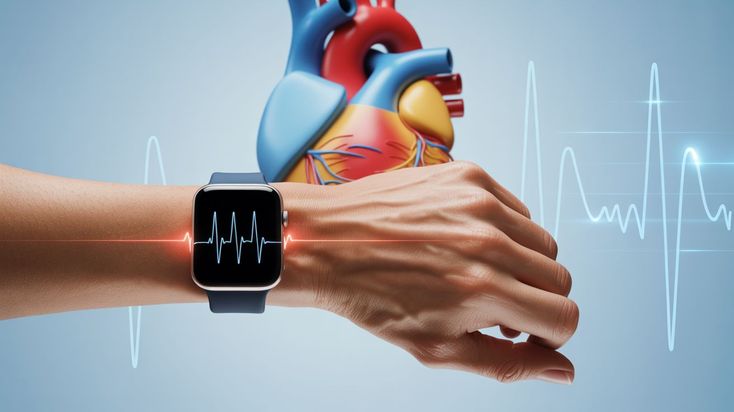
Can Your Smartwatch Really Detect Heart Problems?
Smartwatches have quietly become a part of our everyday lives. What started as simple step counters has now evolved into something much more powerful—devices that can track your heart rate, monitor your sleep, and even give alerts about your health.
This naturally raises an important question: Can a smartwatch actually detect heart problems, or is it just a smart gadget giving general insights?
Let’s understand this in a simple and practical way.
How Do Smartwatches Keep an Eye on Your Heart?
Today’s smartwatches are equipped with sensors that work continuously in the background to monitor your body. When it comes to heart health, here’s what they usually track:
Heart Rate Monitoring
Most smartwatches use light-based sensors to measure your pulse throughout the day. If your heart rate suddenly goes unusually high or drops too low while you’re at rest, the device can notify you.
ECG Feature
Some advanced models allow you to record a basic ECG directly from your wrist. This can help identify irregular heart rhythms, especially conditions like atrial fibrillation.
Blood Oxygen Levels (SpO2)
Smartwatches can also estimate the oxygen level in your blood. While this is more related to lung function, abnormal readings can sometimes point toward underlying health concerns.
Activity, Sleep & Stress Tracking
Your daily habits—like how active you are, how well you sleep, and your stress levels—play a big role in heart health. Smartwatches bring all this information together to give a broader picture of your overall wellbeing.
What Heart Issues Can a Smartwatch Indicate?
It’s important to understand that smartwatches don’t diagnose diseases. However, they can pick up early warning signs that shouldn’t be ignored.
Irregular Heartbeats
If your heart rhythm seems uneven, your watch may alert you. This could be a sign of arrhythmia.
Unusual Heart Rate Changes
A sudden increase or decrease in heart rate without any clear reason might indicate that something needs attention.
Possible Signs of Atrial Fibrillation
Some devices are designed to detect patterns linked to atrial fibrillation (AFib), a condition that can increase the risk of stroke if left untreated.
What Smartwatches Cannot Do
While these devices are helpful, they do have limitations—and it’s important not to over-rely on them.
- They cannot confirm a heart attack. Symptoms like chest pain, sweating, or breathlessness always require immediate medical attention.
- They are not perfectly accurate. Factors like movement, loose straps, or even skin type can affect readings.
- They cannot replace medical diagnosis. Proper tests and expert evaluation are always necessary.
So, How Reliable Are They?
Think of a smartwatch as an early warning system, not a medical device.
They are especially useful for people who:
- Want to stay proactive about their health
- Have a family history of heart conditions
- Are focused on fitness and lifestyle tracking
If your smartwatch repeatedly shows unusual readings, it’s a sign you shouldn’t ignore. Getting checked by a specialist like Dr. Akshay Kashid can help you understand what’s really going on.
When Should You See a Heart Specialist?
Even if your smartwatch shows normal readings, certain symptoms should never be ignored:
- Chest discomfort or pain
- Shortness of breath
- Feeling dizzy or faint
- Fast or irregular heartbeat
- Constant, unexplained tiredness
These could point to serious heart conditions and need proper medical evaluation.
Smartwatch vs Medical Tests
Both have their own roles, and one cannot replace the other.
Smartwatch:
- Tracks your health continuously
- Easy and convenient to use
- Helpful for spotting early changes
Medical Tests:
- Highly accurate and detailed
- Essential for diagnosis
- Guide proper treatment
The best approach is to use your smartwatch for daily awareness, while relying on medical experts for accurate diagnosis.
Final Thoughts
Smartwatches have made it easier than ever to stay connected with your health. They can alert you to changes you might otherwise miss and encourage you to take action early.
But remember—they are just tools, not doctors.
If something doesn’t feel right or your device keeps showing unusual readings, it’s always better to consult a specialist. Expert guidance from professionals like Dr. Akshay Kashid ensures you get the right diagnosis and care at the right time.
Address- Office no. 301’3rd floor, V Business Center, S. no.9/16/1& 2, Laxmi Nagar, Balewadi Gaon, Balewadi, Pune, Maharashtra 411045
Mobile no.: +917058362823