

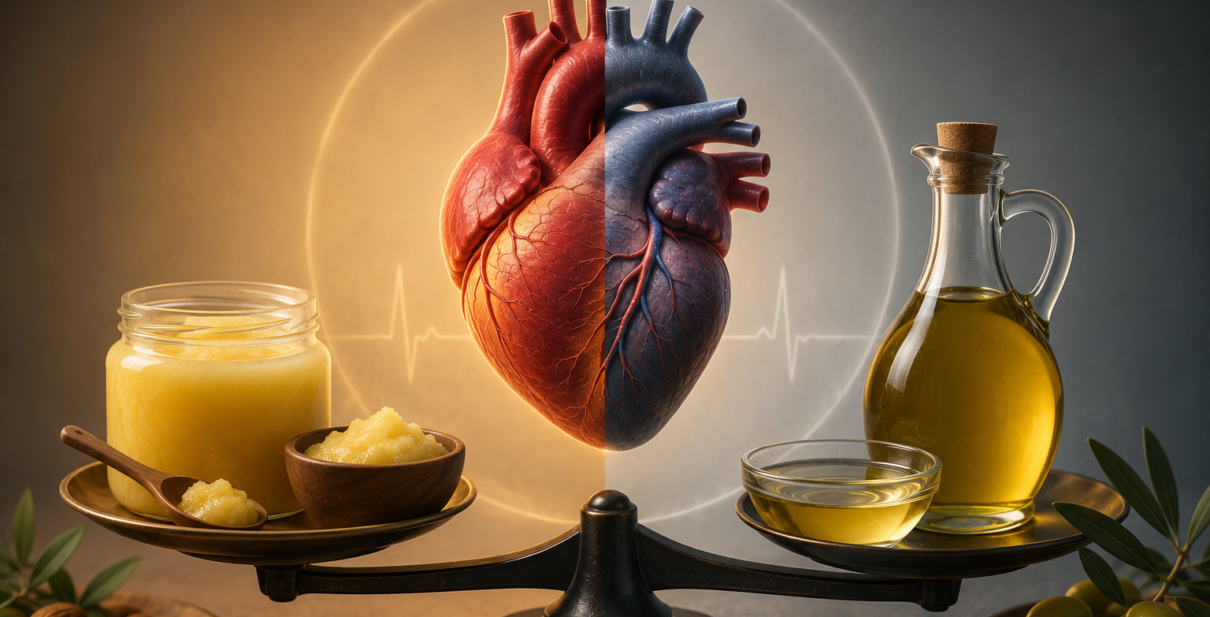
Ghee vs Oil: What’s Actually Better for Your Heart?
In almost every Indian household, there’s an ongoing debate—should we cook with ghee or oil?
Ghee carries a sense of tradition and comfort, while cooking oils are often marketed as the healthier, heart-friendly option. This can make the choice confusing.
But the real answer isn’t about picking one and avoiding the other. It’s about understanding how both work in your body and using them the right way.
Understanding Ghee and Cooking Oils
What Exactly Is Ghee?
Ghee is essentially clarified butter that has been used in Indian kitchens for generations. It adds a rich taste to food and contains fat-soluble vitamins like A, D, E, and K. However, it is also high in saturated fats, which is where the concern begins.
What About Cooking Oils?
Cooking oils include options like mustard oil, sunflower oil, groundnut oil, and olive oil. These are generally rich in unsaturated fats—the kind that support heart health when consumed in the right amount.
How Do They Affect Your Heart?
Ghee: Good or Bad?
Ghee isn’t entirely harmful, but it needs to be used carefully.
In small quantities, it can:
- Help improve digestion
- Enhance the taste and satisfaction of meals
- Provide essential vitamins
However, when consumed in excess:
- It can increase LDL (bad cholesterol)
- Raise the risk of heart-related problems over time
Oils: The Healthier Choice?
Most cooking oils are considered better for heart health, especially when compared to high saturated fats.
They can:
- Help lower bad cholesterol levels
- Support overall cardiovascular function
- Be suitable for everyday cooking
But there’s a catch—too much oil isn’t good either. Overconsumption can lead to weight gain, and highly processed oils may lose some of their nutritional value.
So, What Should You Actually Use?
The simplest answer is: balance matters more than the ingredient itself.
You don’t need to completely stop using ghee, and you don’t have to rely only on oils either. A balanced approach works best.
- A small amount of ghee (around 1–2 teaspoons a day) is usually safe for most healthy individuals
- Using a mix of oils like mustard, groundnut, and olive oil can provide a better range of nutrients
If you have specific health concerns, getting guidance from a specialist like Dr. Akshay Kashid can help you make the right dietary choices.
Simple Habits for a Heart-Healthy Diet
Instead of focusing only on ghee vs oil, it’s more important to look at your overall lifestyle.
- Watch your portions: Even healthy fats can be harmful in excess
- Avoid reheating oil: Reused oil can release harmful substances
- Use a variety of oils: This helps maintain a balance of fatty acids
- Eat a balanced diet: Include fruits, vegetables, whole grains, and protein
- Stay active: Regular exercise is just as important as diet
Who Should Be Extra Careful?
Some people need to be more mindful about their fat intake, including:
- Those with high cholesterol
- Heart patients
- People with diabetes
- Individuals who are overweight or less physically active
In these situations, it’s always safer to consult an expert like Dr. Akshay Kashid for personalized advice.
Clearing Some Common Myths
“Ghee is completely unhealthy”
Not true. In moderation, it can be part of a healthy diet.
“Oils are always safe”
Also not true. Excess oil, even if healthy, can harm your heart.
“Avoid all fats for better health”
Your body actually needs healthy fats to function properly.
Final Thoughts
When it comes to ghee vs oil, there’s no one-size-fits-all answer. Both can be included in your diet if used thoughtfully.
The real focus should be on moderation, variety, and maintaining a healthy lifestyle. Overusing either can increase the risk of heart issues, but using them wisely can support your overall well-being.
And if you’re ever unsure about what suits your body best, consulting a specialist like Dr. Akshay Kashid can help you make informed and safe choices.
Address- Office no. 301’3rd floor, V Business Center, S. no.9/16/1& 2, Laxmi Nagar, Balewadi Gaon, Balewadi, Pune, Maharashtra 411045
Mobile no.: +917058362823