

For thirty-three-year-old Megha, a senior UX designer living in Balewadi, physical fitness was an integral part of her identity. She practiced yoga regularly, ate a balanced diet, and had no history of chronic illness. But over the course of a few months, a strange and frustrating shift occurred.
Initially, it was a subtle breathlessness during her morning warm-ups. Within weeks, climbing the short flight of stairs to her favorite local cafe left her pausing to catch her breath, her heart pounding erratically against her ribs. When she mentioned it to friends, they blamed it on the “onset of your 30s” or subtle post-viral fatigue.
She decided to seek a professional medical opinion, expecting to hear she had a mild iron deficiency or needed better conditioning. Instead, after a non-invasive chest scan, the specialist looked up and delivered a sentence that felt completely surreal: “Megha, you have a structural hole in your heart. It has been there since the day you were born.”
How can a structural cardiac defect exist inside your body for over three decades without causing a single day of sickness, only to surface suddenly during the prime of your adult life?
For thousands of adults, discovering an unclosed Atrial Septal Defect (ASD) or Ventricular Septal Defect (VSD) in their 30s or 40s is a shocking revelation. Often mislabeled as strictly “childhood conditions,” these minor structural gaps can remain completely silent for decades, waiting for the natural physiological shifts of adulthood to unmask themselves.
The Silent Reservoirs: Why Gaps Can Hide for Decades
To understand how a congenital defect can go unnoticed for decades, we must look at the structural dividing walls of the heart, known as the septa.
The human heart is divided into two distinct systems operating side-by-side. The right side receives oxygen-depleted blood from the body and pumps it into the lungs at low pressure. The left side receives freshly oxygenated blood from the lungs and pumps it out to the rest of the body at high pressure.
- Atrial Septal Defect (ASD): This is an unclosed opening in the wall dividing the two upper collection chambers (the atria).
- Ventricular Septal Defect (VSD): This is a gap in the thick muscular wall separating the two lower pumping chambers (the ventricles).
During childhood and early twenties, the heart muscle is exceptionally compliant, elastic, and highly adaptive. Because the left side of the heart operates under much higher pressure than the right side, a portion of oxygenated blood naturally slips backward through the gap from the left chambers into the right chambers—a phenomenon cardiologists call a left-to-right shunt.
In minor or moderate defects, the amount of blood slipping backward is small enough that the right side of the heart can handle the extra fluid without complaining. The child grows up completely healthy, plays sports, and passes routine physical exams because the heart is successfully compensating behind the scenes.
The Adulthood Turning Point: Why Symptoms Emerge in Your 30s
As you cross into your 30s, two inevitable physiological changes occur that disrupt this delicate fluid balance: a natural, gradual stiffening of the left ventricle and a subtle increase in systemic vascular resistance.
When the left ventricle becomes less flexible, it experiences higher internal filling pressures. This changes the dynamics at the structural gap:
- The Augmented Shunt: The higher pressure in the left chambers forces an increasing volume of blood to cascade backward through the ASD or VSD.
- Right-Sided Volume Overload: The right atrium and ventricle are suddenly forced to process an absolute surplus of blood, day in and day out.
- Pulmonary Congestion: This massive backup of extra blood is pumped directly into the delicate vessels of the lungs. The pulmonary arteries become engorged and stressed, leading to early-stage pulmonary hypertension.
This fluid backup is exactly why symptoms appear out of nowhere in your 30s. The lungs are physically congested with blood, leaving less room for efficient oxygen exchange. What used to be an easy jog or a climb up the stairs turns into a struggle for air, accompanied by an unsettling fluttering sensation in the chest as the stretched right upper chamber tries to manage the volume overload by firing erratic electrical signals.
Spotting the Invisible: ASD vs. VSD Symptoms in Adults
Because these conditions develop gradually, adults frequently misinterpret the warning signs as standard lifestyle fatigue. It is vital to recognize the distinct patterns of adult-onset congenital anomalies:
Unexplained, Exertional Shortness of Breath
This is the most common presenting symptom. If an activity that was effortless a year ago—such as walking through an automated shopping layout or carrying a laptop bag across a corporate campus—now leaves you uncharacteristically winded or gasping for air, it points to pulmonary fluid changes.
Unprovoked Heart Flutters or Palpitations
When an ASD goes untreated into your 30s, the constant volume of extra blood physically stretches the walls of the right atrium. This stretching disrupts the heart’s internal electrical grid, frequently triggering a rapid, chaotic rhythm known as Atrial Fibrillation or atrial flutter.
Persistent Fatigue and Reduced Exercise Tolerance
You might find yourself modifying your routines to avoid getting tired, dropping out of weekend sports activities, or needing extended recovery time after minor physical effort because your muscles aren’t receiving optimal oxygenated blood flow.
Specialized Structural Evaluation at Dr. Akshay Kashid’s Clinic
Discovering a congenital heart defect as an adult can feel overwhelming, but modern structural cardiology offers highly precise, clear answers. Managing an adult ASD or VSD requires moving away from guesswork and utilizing definitive imaging to map your heart’s fluid dynamics accurately.
At the Dr. Akshay Kashid Heart Care Clinic in Balewadi-Baner, Pune, a dedicated structural diagnostic framework helps patients evaluate congenital anomalies safely:
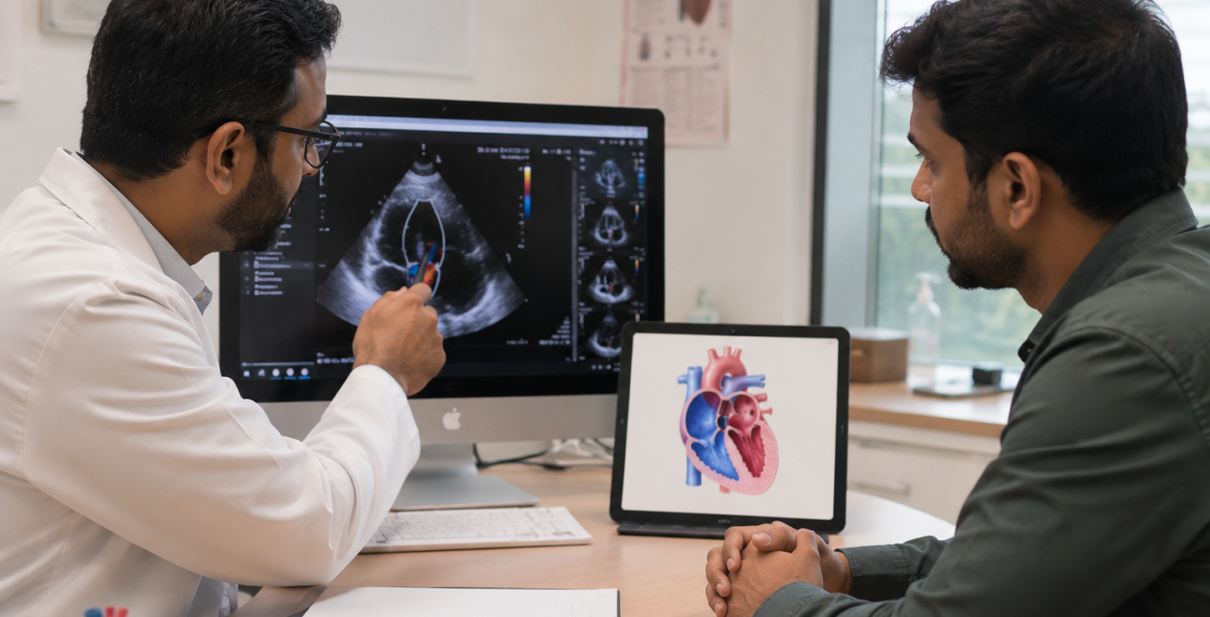
- High-Resolution Structural Imaging (2D Echo): The absolute gold standard for discovering a hidden hole in the heart is a detailed 2D Echo Test In Pune. Dr. Kashid utilizes advanced cardiac ultrasound to visually locate the exact position of the defect, measure its size in millimeters, calculate the precise volume of the left-to-right shunt, and check for any signs of elevated pressure in your lungs.
- Electrical Grid Mapping: To ensure that the extra fluid volume hasn’t initiated silent rhythm disturbances, the clinic provides preventative ECG Test In Pune screenings and ambulatory Holter monitoring to capture any intermittent atrial flutters early.
- Systemic Resistance Management: Protecting your heart muscle from unnecessary strain involves optimizing the entire vascular network. Dr. Kashid integrates specialized High Blood Pressure Treatment In Pune and targeted lipid oversight to keep your arterial pathways clear and flexible, reducing backward pressure across the defect.
- Expert Interventional Counseling: Many small-to-moderate adult ASDs and VSDs can be corrected without open-heart surgery using minimally invasive, catheter-based device closures. As an experienced interventional cardiologist, Dr. Akshay Kashid provides comprehensive, step-by-step guidance, helping patients understand when a simple monitoring routine is sufficient and when a modern device closure is the right path forward.
Conclusion: Correcting the Architecture for the Future
Discovering that your heart has been working with a structural anomaly since birth isn’t a reason to panic; it is an opportunity to provide your body with the structural support it has earned. The human heart is remarkably adaptive, but it shouldn’t have to work under an unnatural fluid overload forever. By identifying these hidden gaps through clear diagnostic data and addressing them under expert clinical guidance, you can remove the structural strain on your lungs and restore the clear, unrestricted breathing you need to enjoy your life.
If you have experienced unexplained breathlessness during routine walks, sudden heart flutters, or a persistent drop in your daily energy levels, listen to your body and look past the surface explanations.
To check your structural cardiac baseline or discuss a personalized health management routine, schedule an expert consultation at the Dr. Akshay Kashid Heart Care Clinic. Reach out directly to our team by calling 07058362823, or visit us in person at Office no. 301, 3rd Floor, V Business Center, S. no. 9/16/1 & 2, Near Lakshmi-Mata Mandir, Balewadi-Baner, Pune, Maharashtra 411045. Let’s make sure your heart has the solid foundation it needs to move forward comfortably.