

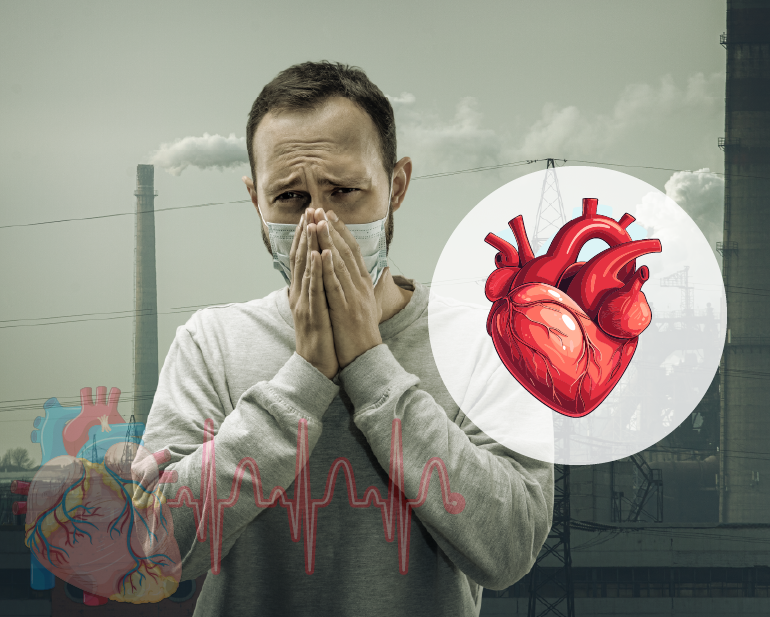
The flight from a quieter tier-2 hometown had landed just three months ago, and twenty-eight-year-old Tanmay felt he was living his dream. Having just secured a lucrative project lead role at a prominent global technology firm in Hinjawadi, he settled into a premium high-rise apartment bordering the bustling highway corridor of Baner-Balewadi. To avoid the peak-hour bottleneck, Tanmay commuted on his motorbike every day, spending a consistent 45 minutes breathing in the hazy, dust-laden air of a rapidly expanding urban metropolis.
Lately, however, his evening unwinding routines felt different. He wasn’t just tired from the corporate workload; he felt a strange, heavy fatigue deep within his chest. His throat felt perennially dry, and an occasional, unprovoked racing pulse left him unsettled during late-night standup calls. He dismissed it as the “standard cost of adjusting to a fast-paced city life.”
What Tanmay didn’t realize was that every breath he took on his daily commute was bypassing his lungs and mounting a direct, chemical assault on the cellular lining of his heart.
For thousands of young corporate professionals relocating to booming tech hubs like Pune and the surrounding PCMC region, lifestyle focus is usually directed toward gym memberships, clean water, and work-life balance. Yet, a silent, environmental variable is shifting their cardiovascular risk profile: the sudden exposure to elevated levels of fine particulate matter ($PM_{2.5}$) born from massive infrastructure projects, industrial zones, and highway traffic.
Entering the Bloodstream: The Path of $PM_{2.5}$ to Your Arteries
To understand how breathing polluted city air can damage your circulatory system, we must look at the microscopic scale of the particulate matter involved. Ambient urban air pollution is largely composed of $PM_{2.5}$—fine inhalable particles that are 2.5 micrometers or smaller in diameter (roughly 30 times thinner than a single human hair).
When you inhale larger dust particles, your upper respiratory tract can filter them out. However, $PM_{2.5}$ bypasses these natural cellular defense barriers entirely:
- Alveolar Penetration: The microscopic particles travel deep into your lungs, reaching the tiny air sacs known as alveoli.
- The Systemic Leap: Because they are so small, these particles readily slip through the ultra-thin alveolar membrane directly into your capillary blood vessels, entering your systemic bloodstream.
- The Immune Flare-up: The moment these foreign, toxic particles float into your circulatory network, your immune system flags them as an immediate threat. Specialized white blood cells release a massive wave of pro-inflammatory signaling proteins called cytokines (such as Interleukin-6 and TNF-alpha).
This sudden shift triggers widespread, systemic endothelial inflammation. Your blood vessels, which are meant to remain smooth and flexible, become chemically inflamed and hyper-reactive from the constant exposure to urban particulate matter.
How Air Pollution Speeds Up Vascular Plaque
For a young adult moving into a high-density corporate corridor, this pollution-triggered inflammation acts as an invisible accelerator for atherosclerosis (the hardening and narrowing of the arteries).
Under normal conditions, a healthy, uninflamed blood vessel wall can easily prevent occasional circulating fats from sticking to its lining. But when environmental toxins cause continuous inflammation, the delicate endothelial cells lining your coronary arteries express specialized adhesion molecules. These molecules act like microscopic velcro, trapping passing particles of Low-Density Lipoprotein (LDL) cholesterol.
Once trapped beneath the inflamed vascular wall, this cholesterol undergoes rapid oxidation. The immune system attempts to clear the area, creating bloated, fat-laden cells that form the foundational core of arterial plaque. For young professionals navigating high-stress corporate environments—where erratic sleep and caffeine reliance are already common—this additional environmental strain can cause silent plaque to accumulate at an accelerated rate, narrowing vital pathways long before a person experiences noticeable physical symptoms.
Environmental Protection at Dr. Akshay Kashid’s Heart Care Clinic
Relocating for your career shouldn’t mean leaving your long-term cardiovascular health to chance. Protecting your vascular network from the realities of urban expansion requires systematic monitoring and specialized medical care.
At the Dr. Akshay Kashid Heart Care Clinic in Balewadi-Baner, Pune, a dedicated clinical framework is utilized to help newly relocated professionals assess and defend their hearts against environmental stressors:
- Vascular Inflammation Tracking: Standard health checks often overlook environmental stress. Dr. Kashid provides advanced biomarker testing, checking specific inflammatory indicators like High-Sensitivity C-Reactive Protein (hs-CRP) to measure the exact impact of urban exposure on your blood vessels.
- Precision Endothelial Assessment: If you are experiencing unusual fatigue, chest heaviness, or erratic heart rates after moving, Dr. Kashid maps your heart’s baseline health using accurate diagnostic tools, including a preventative ECG Test In Pune screening or an ambulatory Holter monitor to rule out hidden rhythm anomalies.
- Targeted Plaque Prevention & Shielding: To ensure that environmental inflammation isn’t actively combining with circulating fats to build plaque, the clinic offers highly individualized Cholesterol Treatment In Pune to optimize your lipid profile and keep your vascular lining resilient.
- Systemic Pressure Control: Urban pollution and long commutes can cause a silent rise in resting blood pressure. Dr. Kashid integrates specialized High Blood Pressure Treatment In Pune alongside targeted medical guidance (such as utilizing high-grade anti-pollution cabin filters and N95 masks during peak travel hours) to protect your arterial network from unnecessary strain.
Conclusion: Securing Your Health in the New City
A major career move to a booming tech hub like Pune is an exciting milestone, but your cardiovascular system shouldn’t have to carry the hidden cost of a changing environment. Your blood vessels rely on a clean, stable internal balance to keep blood flowing smoothly to your heart. While you cannot single-handedly alter the air quality of a growing city, you can choose to monitor your internal metrics and take proactive steps to protect your vascular lining from environmental strain.
If you have recently relocated to Pune’s corporate zones and are experiencing unexplained fatigue, sudden chest flutters, or shortness of breath on your daily commute, it is time to check your cardiovascular baseline with professional care.
To evaluate your current heart health or build a personalized preventative routine, schedule a medical consultation at the Dr. Akshay Kashid Heart Care Clinic. Reach out directly via phone at 07058362823 or visit the clinic at Office no. 301, 3rd Floor, V Business Center, S. no. 9/16/1 & 2, Near Lakshmi-Mata Mandir, Balewadi-Baner, Pune, Maharashtra 411045. Keep your heart resilient as you build your future.